N300,000 Minimum Wage in Nigeria: Workers Demand Salary Increase
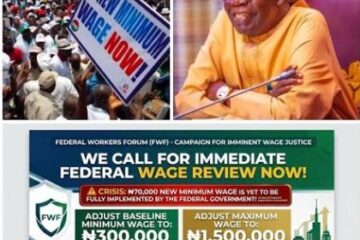
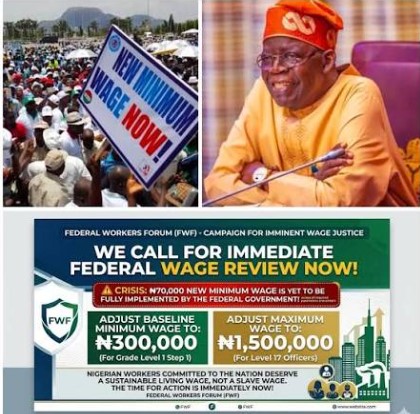
The demand for a N300,000 minimum wage in Nigeria has gained fresh attention after the Federal Workers Forum (FWF) called on the Federal Government and the National Assembly to urgently review the salaries of federal civil servants.
The forum is seeking to increase the current ₦70,000 minimum wage to ₦300,000, arguing that the existing wage is no longer sufficient to meet the rising costs of food, transportation, accommodation, electricity, cooking gas, and other necessities.
The demand was contained in a letter addressed to President Bola Tinubu and the National Assembly. The workers also proposed a salary structure that would see the earnings of senior federal civil servants rise progressively, with Level 17 officers receiving up to ₦1.5 million.

Why Are Nigerian Workers Demanding a N300,000 Minimum Wage?
According to the Federal Workers Forum, the demand is driven largely by the worsening cost of living and what it described as the inadequate purchasing power of the current minimum wage.
Nigeria’s current national minimum wage was increased from ₦30,000 to ₦70,000 in 2024 following negotiations between the Federal Government and organised labour. President Tinubu had also agreed that the wage would be reviewed after three years.
However, the workers argue that economic conditions have changed significantly since the ₦70,000 wage was approved.
Food prices, transportation costs, rent, electricity bills and other household expenses have continued to put pressure on workers’ incomes. The forum therefore believes that another wage review is necessary to ensure that workers can afford necessities.
Recent economic reporting has also highlighted the continuing cost-of-living pressures facing Nigerian households, despite signs of improvement in some areas of the wider economy.

Federal Workers Forum Says ₦70,000 Is No Longer Enough
The FWF argued that the current wage structure does not adequately reflect the economic realities facing federal workers.
The organisation also complained about what it described as incomplete implementation of the 2024 minimum wage and consequential adjustments for federal civil servants.
According to the forum, workers have struggled to cope with basic expenses and, in some cases, have resorted to borrowing through microfinance institutions and digital lending platforms to meet everyday needs.
The workers said their proposed ₦300,000 minimum wage was calculated around expenses including feeding, transportation, accommodation, family support, electricity, cooking gas, telecommunications, water, and other household needs.
Other Demands From the Workers
Beyond the N300,000 minimum wage in Nigeria, the Federal Workers Forum is seeking several additional measures to improve workers’ welfare.
These include the full implementation of the consequential adjustment linked to the 2024 minimum wage, payment of arrears of the 40 per cent peculiar allowance and the introduction of a permanent Cost of Living Allowance.
The workers also called for a Family Support Allowance, improved health insurance coverage, housing and car loan schemes, better pension arrangements and measures to address stagnation and promotion delays within the civil service.
The forum further proposed education support for children of federal workers and pensioners, as well as tax relief measures on workers’ allowances.
Conclusion
The call for a N300,000 minimum wage in Nigeria marks a fresh development in the country’s ongoing debate over workers’ salaries and the cost of living.
The Federal Workers Forum says the current ₦70,000 wage is inadequate and has called for an immediate review, alongside broader improvements to salaries, allowances, pensions, healthcare, and other worker benefits.
While the proposal would provide a substantial increase for low-income workers if approved, the government must also consider its broader economic implications, including inflation, public expenditure and the ability of employers to sustain higher wages.
For now, ₦300,000 remains a proposal rather than an approved minimum wage. The coming discussions between government, workers and other stakeholders will determine whether Nigeria moves towards the proposed figure or adopts another approach to addressing the country’s wage and cost-of-living challenges.